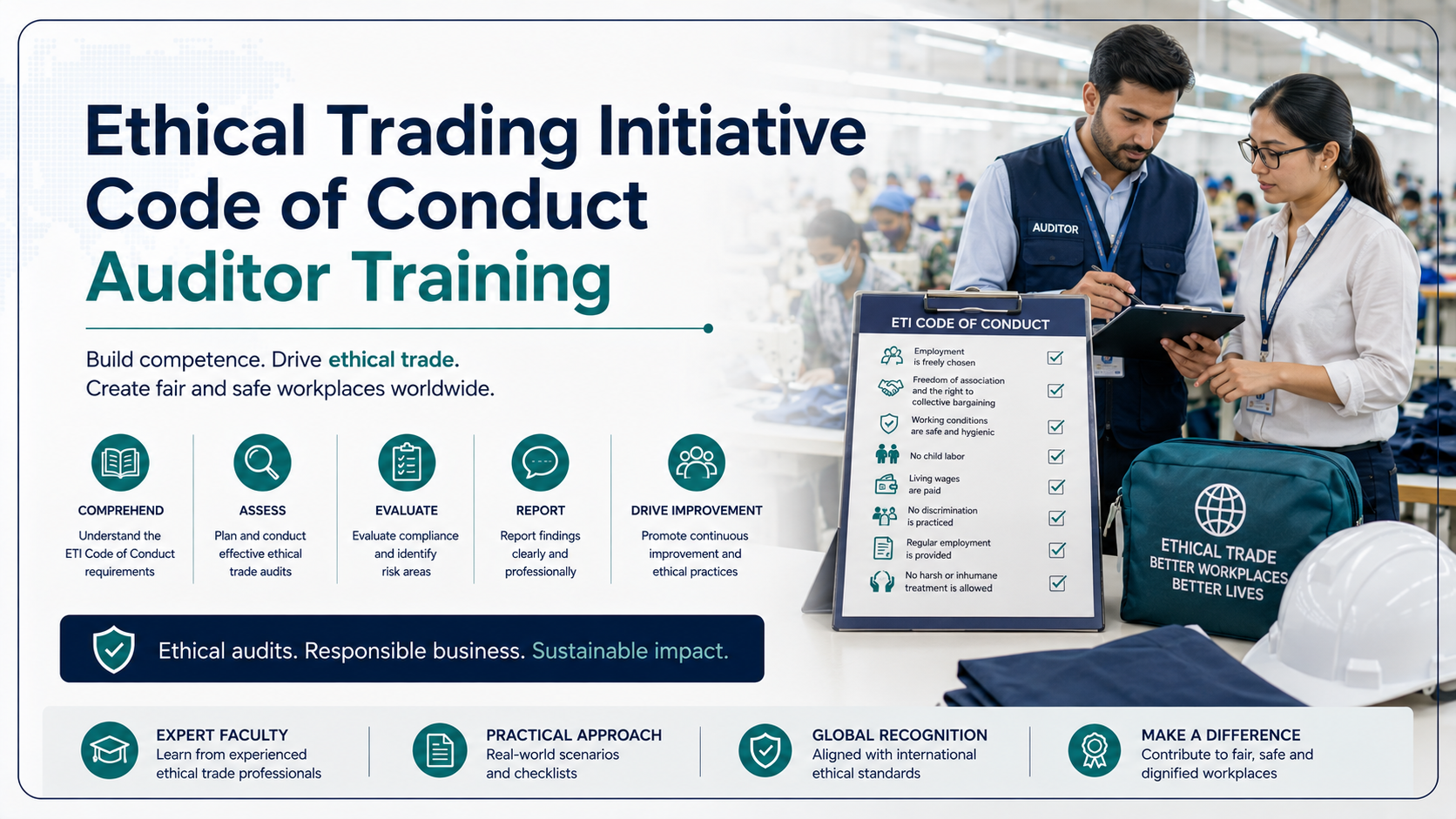
Practical Training for Social Compliance Auditors on ETI Labour Standards, Audit Evidence, Worker Interviews and Corrective Action
Created by SF Trainings Team
This course provides practical training for professionals who want to understand and audit workplace conditions against the Ethical Trading Initiative Code of Conduct. It explains the nine ETI Base Code principles and shows how auditors apply them during audit planning, site tours, worker interviews, document review, evidence evaluation and reporting. Learners will develop the ability to identify labour-rights risks, unsafe working conditions, forced labour indicators, child-labour concerns, wage and working-hours issues, discrimination, harassment and other social-compliance risks. The course also covers auditor ethics, professional judgement, evidence triangulation, nonconformity writing, root-cause analysis, corrective action and worker-centred remediation. Practical examples, audit scenarios and assessments help learners connect each requirement with real workplace situations. By completing the course, learners will be better prepared to conduct credible, independent and evidence-based social-compliance audits.
You will learn to:
ETI Framework
Understand the purpose, structure and practical role of the Ethical Trading Initiative in responsible supply chains.
Nine ETI Principles
Interpret all nine ETI Base Code principles and understand the worker rights protected by each requirement.
International Standards
Connect ETI requirements with relevant ILO conventions, human rights principles and due diligence frameworks.
Risk-Based Audit Planning
Define audit objectives, scope, criteria, sampling priorities, team responsibilities and evidence requirements.
Effective Site Tours
Conduct structured workplace inspections and identify labour, occupational safety, fire and chemical safety risks.
Worker Interviews
Select representative workers and conduct confidential, non-leading interviews without management interference.
Document Verification
Review recruitment, employment, payroll, attendance, working-hours, disciplinary and safety records.
Evidence Triangulation
Cross-check documents, workplace observations and interview statements to identify inconsistencies and concealed risks.
Labour-Rights Risks
Recognise indicators of forced labour, child labour, discrimination, harassment and restrictions on freedom of association.
Wages and Working Hours
Assess wages, benefits, deductions, overtime and working-hours records against applicable requirements.
Auditor Ethics
Apply independence, objectivity, confidentiality, professional scepticism and ethical judgement throughout the audit.
Fraud Detection
Identify coached workers, falsified records, double books, hidden production and unauthorised subcontracting.
Audit Findings
Write clear, factual and evidence-based nonconformities linked to the correct audit criteria.
Corrective Action
Distinguish correction, corrective action and worker-centred remediation, and evaluate proposed action plans.
Follow-Up Verification
Confirm whether corrective actions have been implemented, sustained and effective in preventing recurrence.
Join thousands of learners and build in-demand skills.