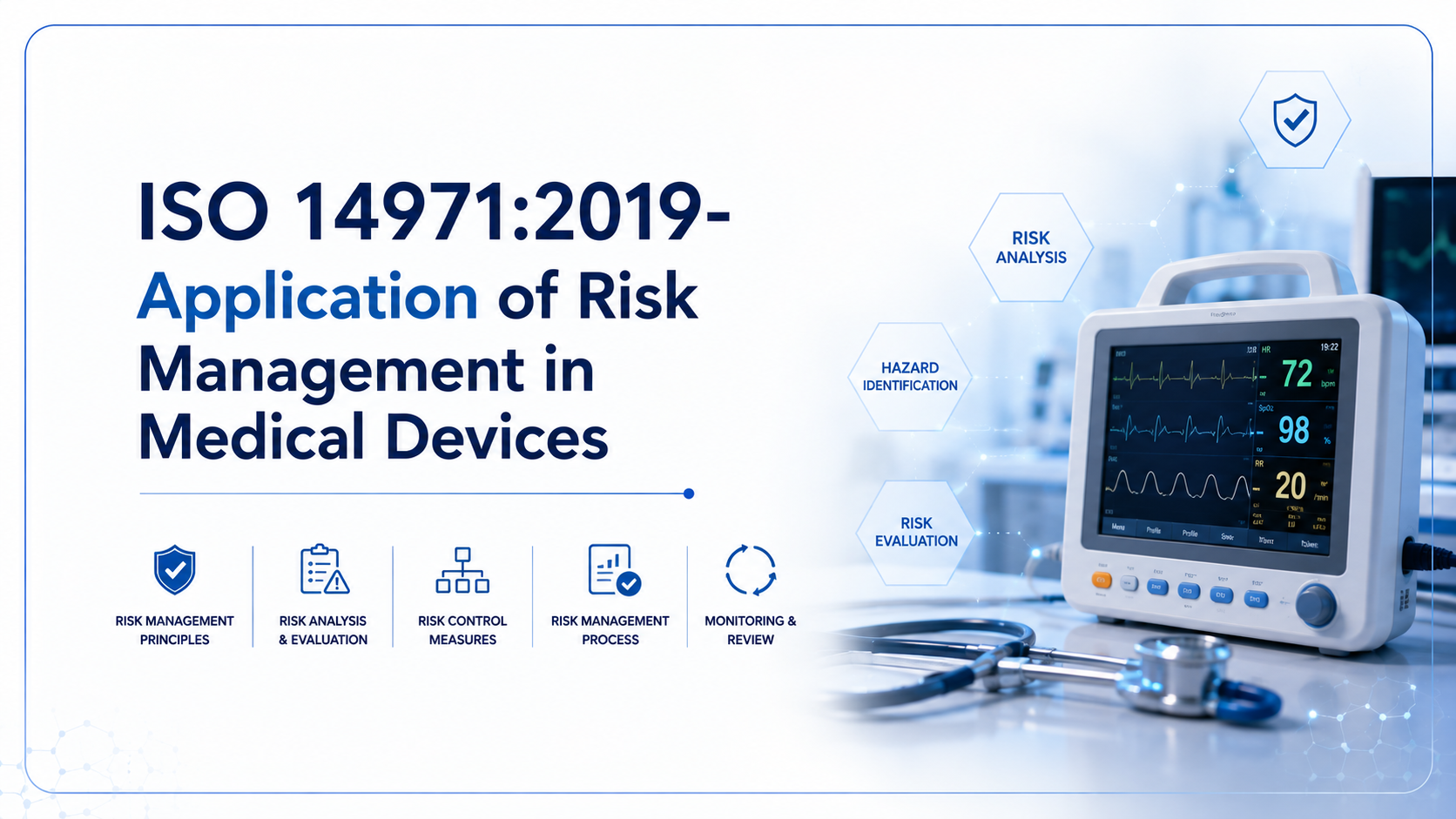
Practical Risk Assessment, Control and Lifecycle Safety for Medical Devices
Created by SF Trainings Team
Practical Risk Assessment, Control and Lifecycle Safety for Medical Devices
You will learn to:
ISO 14971 Fundamentals
Understand the purpose, scope and lifecycle approach of ISO 14971:2019.
Risk Management Planning
Learn how to prepare a structured and compliant Risk Management Plan.
Hazard Identification
Identify hazards, hazardous situations, foreseeable events and potential harms.
Risk Estimation
Estimate medical device risks using probability and severity.
Risk Evaluation
Compare estimated risks against documented risk acceptability criteria.
FMEA Application
Apply Failure Mode and Effects Analysis to identify and prioritize device failures.
Fault Tree Analysis
Use top-down analysis to investigate causes of critical undesirable events.
Risk Control Hierarchy
Select controls through safe design, protective measures and safety information.
Control Verification
Confirm that risk control measures have been correctly implemented.
Control Validation
Evaluate whether implemented controls achieve the intended safety outcomes.
Residual Risk Assessment
Assess and justify the risks remaining after controls are applied.
Benefit–Risk Analysis
Determine whether a device’s medical benefits outweigh its remaining risks.
Risk Management File
Maintain complete, traceable and audit-ready risk management documentation.
Post-Market Surveillance
Use complaints, incidents and performance data to identify emerging risks.
Continuous Risk Review
Update risk assessments and controls throughout the medical device lifecycle.
Join thousands of learners and build in-demand skills.