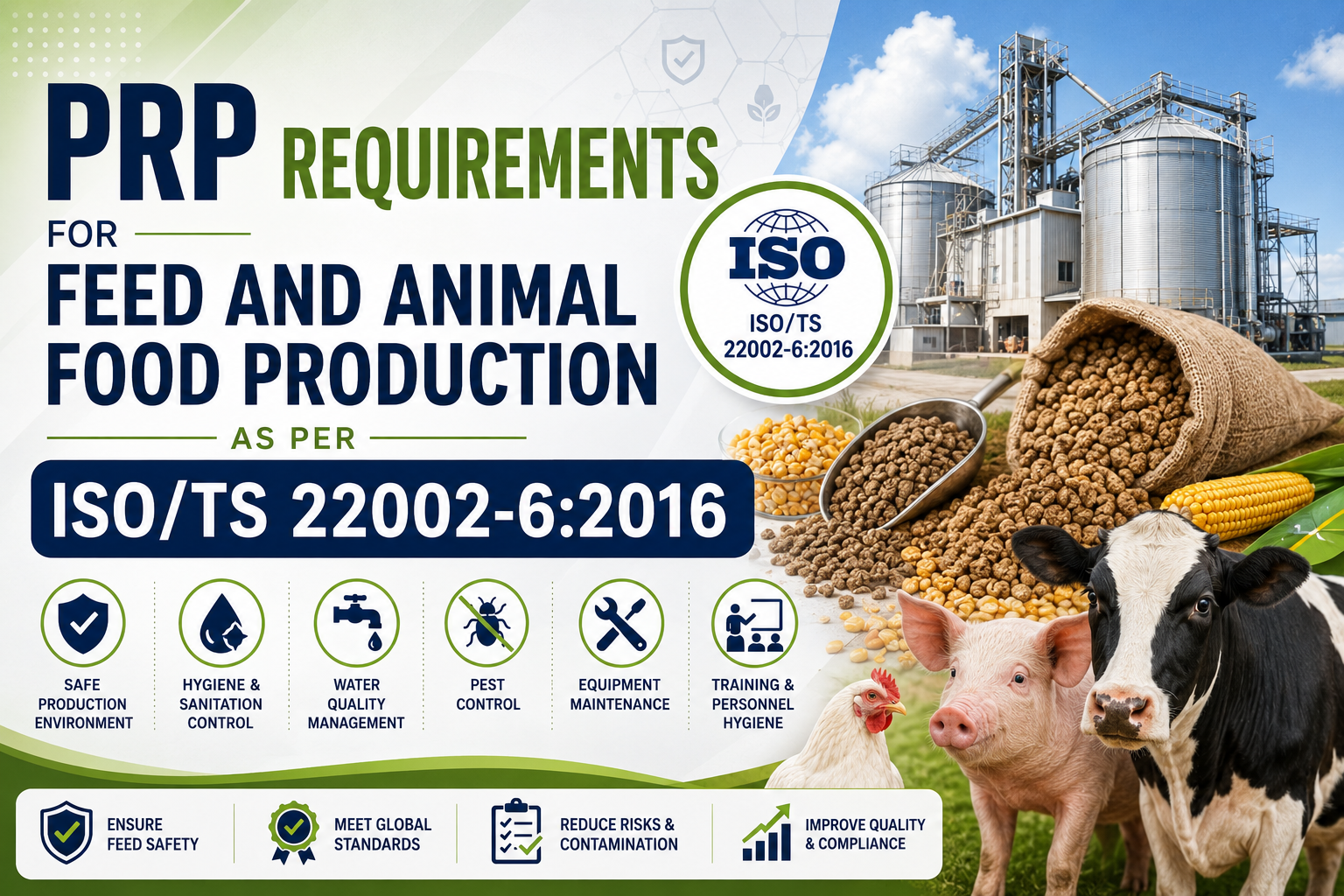
Master PRP Controls for Safe, Compliant Feed & Animal Food Production under FSSC 22000 Category D
Created by SF Trainings Team
The PRP Framework for Feed and Animal Food Production course provides a practical and auditor-focused understanding of Prerequisite Programmes (PRPs) applicable to feed and animal food production under FSSC 22000 Category D.
The course is aligned with ISO 22000:2018, ISO/TS 22002-6:2016, and FSSC 22000 Version 6 additional requirements. It explains how effective PRPs establish the essential environmental, hygienic, operational, and process-control conditions required to support feed safety and prevent contamination, cross-contamination, carryover, deterioration, adulteration, mix-up, and unsafe product release.
Across six structured modules, learners explore PRP framework requirements, site infrastructure, utilities, supplier and incoming material controls, formulation inputs, chemical management, cleaning and sanitation, pest control, personnel hygiene, process control, batching, storage, dispatch, transport interfaces, traceability, and recall readiness.
The course also develops practical auditing competence. Learners are guided on how to collect objective evidence, conduct risk-based sampling, follow audit trails, identify control weaknesses, distinguish isolated lapses from systemic failures, write clear nonconformity statements, evaluate corrective actions, and assess PRP effectiveness.
Through practical examples, audit checkpoints, case studies, scenarios, quizzes, and a final assessment, learners gain the knowledge and confidence needed to implement, maintain, verify, or audit PRPs effectively within feed and animal food production facilities.
You will learn to:
PRP Framework
Understand how prerequisite programmes create the foundation for safe feed and animal food production.
Standards Integration
Understand how ISO 22000:2018, ISO/TS 22002-6:2016, and FSSC 22000 Version 6 work together.
PRPs, OPRPs & CCPs
Differentiate between control types and apply them correctly using feed-production examples.
Site & Infrastructure Control
Evaluate facility layout, zoning, utilities, drainage, ventilation, and infrastructure for feed safety risks.
Supplier & Material Control
Assess supplier approval, incoming material verification, specifications, certificates, and material status controls.
Formulation & Dosing Control
Evaluate formulation accuracy, weighing, batching, premixes, sensitive ingredients, and dosing practices.
Chemical Management
Control cleaning chemicals, pesticides, lubricants, maintenance substances, and other hazardous materials safely.
Cleaning & Sanitation
Assess cleaning schedules, housekeeping, line clearance, sanitation practices, and carryover prevention.
Pest Management
Evaluate pest prevention, monitoring, trend analysis, contractor performance, and corrective actions.
Personnel Hygiene & Health
Assess hygiene practices, protective clothing, behaviour, access control, and illness-reporting systems.
Process & Batching Control
Evaluate sequencing, mixing, pelleting, cooling, coating, packing, and other feed-production processes.
Storage & Dispatch
Assess product identification, segregation, stock rotation, release, loading, and dispatch controls.
Transport Hygiene
Evaluate vehicles, containers, loading practices, and transport interfaces for contamination and product-protection risks.
Traceability & Recall
Assess batch traceability, mass balance, withdrawal procedures, mock recalls, and recall effectiveness.
Audit Evidence Collection
Collect reliable objective evidence through observation, interviews, documents, and operational records.
Risk-Based Auditing
Apply risk-based sampling and follow audit trails through feed manufacturing operations.
Nonconformity Writing
Write clear, evidence-based findings that link requirements, objective evidence, and feed safety failures.
Corrective Action Evaluation
Review root causes, corrections, corrective actions, implementation, and effectiveness.
Audit Readiness
Apply PRP requirements confidently during internal, supplier, certification, and FSSC 22000 Category D audits.
Join thousands of learners and build in-demand skills.